STYLE QUIZ RESULT
Rugged/Workwear style
Tough, practical clothes rooted in manual-labour gear: heavy denim, canvas, flannel and boots that age well with wear.
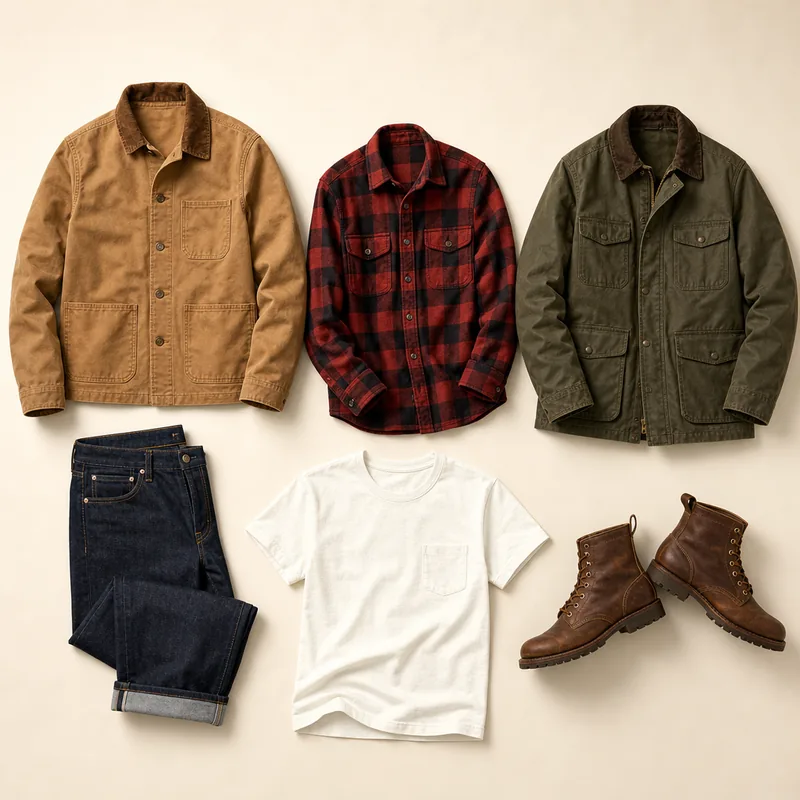
Tough, practical clothes rooted in manual-labour gear: heavy denim, canvas, flannel and boots that age well with wear.
Images on this page were generated with AI. They show clothes only, with no people or brands.
Rugged/Workwear comes from clothes made for physical work: duck canvas chore coats, heavy denim, flannel shirts and leather boots. The appeal is that they get better with use. Denim fades, canvas softens, and boots take the shape of your feet.
It reads best when the pieces are simple and sturdy. One work jacket over a plain tee and dark jeans says workwear; every heritage detail at once can start to look like a costume.
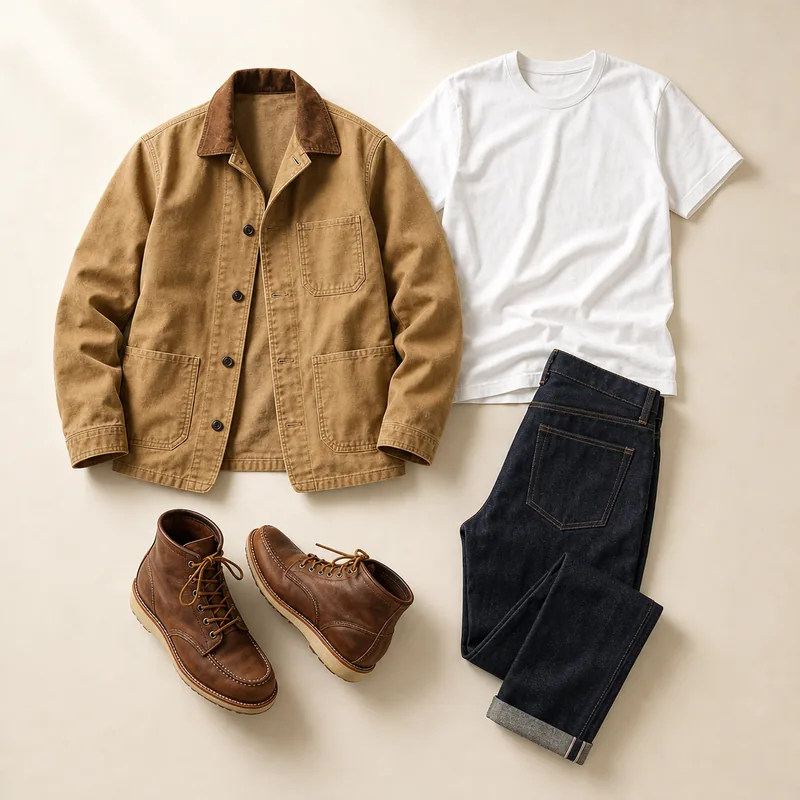
Signature pieces: duck canvas or denim chore coat, raw or rigid dark denim jeans, double-knee or carpenter work pants, plaid flannel shirt in blue, green or tan, denim or chambray work shirt, heavy plain T-shirt, leather work boots, Aran or cable knit.
Outfit formulas:
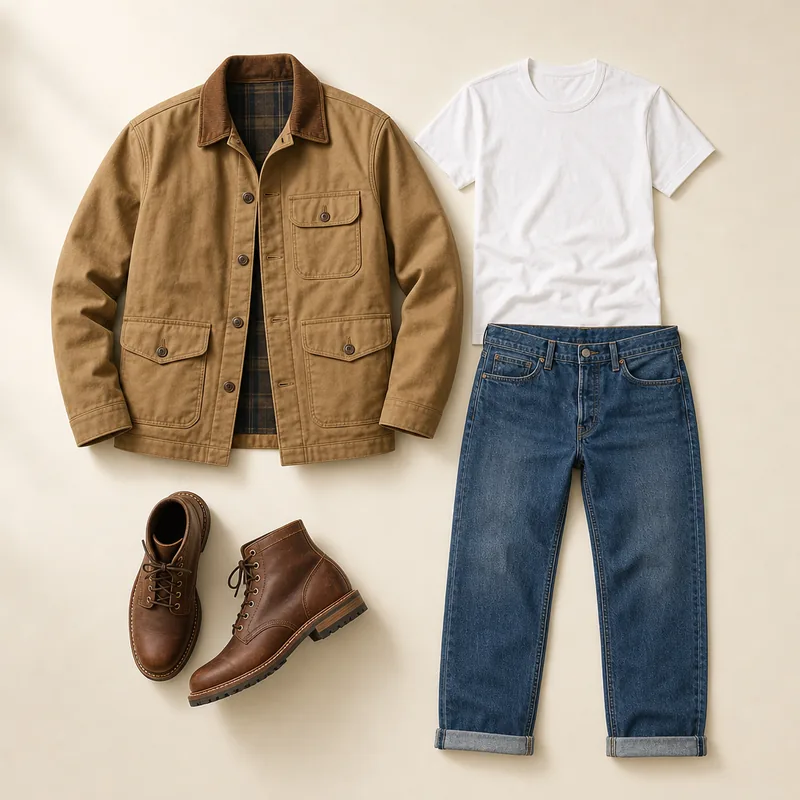
Signature pieces: barn jacket or canvas chore jacket, straight-leg or relaxed jeans, carpenter or wide-leg work pants, plaid flannel shirt, chambray or denim shirt, plain T-shirt, leather work boots or lug-sole boots, chunky cable knit.
Outfit formulas:
The menswear side is well sourced. Heddels lists double-knee pants, work shirts and jackets, duck canvas and carpenter pants as classic American workwear. Put This On pairs Aran and cable knits with jeans under chore coats and field jackets, and Die, Workwear! recommends plaid flannels in blue, green and tan alongside chambray shirts. Wikipedia's workwear entry records how denim jackets, flannel, raw denim and work boots moved from job sites into everyday fashion.
Womenswear is weaker. The main source is a W Magazine piece on the barn-jacket revival, which suggests wearing one with jeans and a T-shirt. The women's formulas carry the menswear vocabulary over, supported by trend coverage rather than a long-running women's workwear authority.
The other styles: Polished Classic · Easy Casual · Minimal Modern · Expressive · Soft Romantic
About this article: I wrote this with help from Claude, Anthropic's AI. The ideas and opinions are mine; Claude helped draft and research, and I edited until I'd put my name on it. Statistics link to their sources. If something's wrong, tell me. How I write these →