The shoe you wear sets the formality ceiling for your entire outfit — you can dress down a blazer with casual shoes, but you can't dress up sneakers with a suit. Match shoes to your most formal moment of the day. The five levels from most to least formal: patent Oxford, leather Oxford/Derby, Chelsea boot/loafer, clean leather sneaker, athletic shoe.
Shoes matter more than most people realize — more than the shirt, more than the trousers. The gap between a dress shoe and a sneaker is visible to everyone, even people who couldn't tell you why. You can dress a blazer down with casual shoes. You can't dress sneakers up with a suit. Whatever you put on your feet sets the ceiling for the whole outfit.
I figured this out at a client event a few years ago. Sport coat, dress trousers, clean sneakers I was sure were fine. They weren't. The host noticed. The sneakers were the only thing off, and they dragged everything else down with them. Lesson learned the expensive way.
The hierarchy, from most to least formal
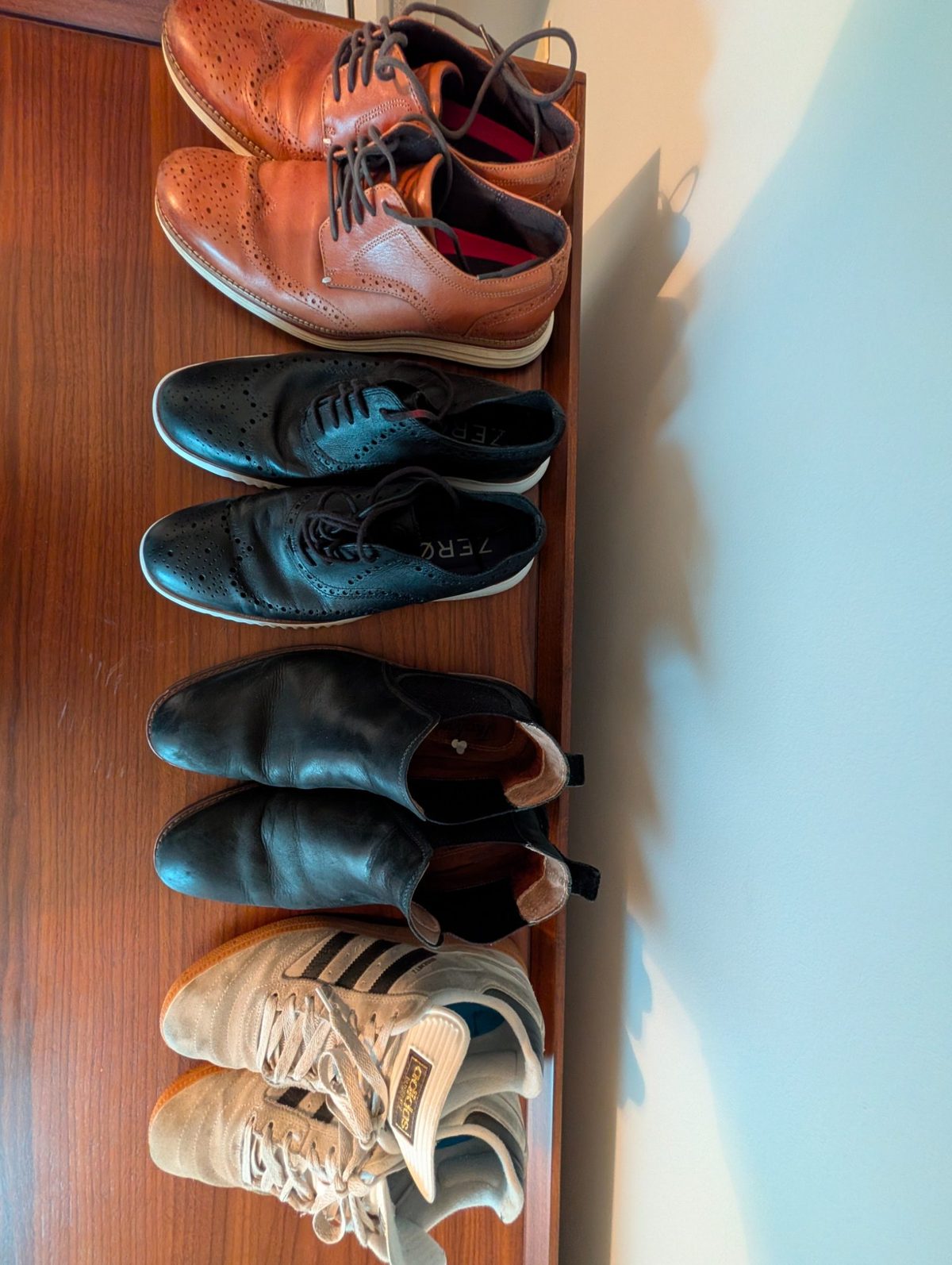
Each shoe type, specifically
The Oxford
Most formal everyday shoe. Black cap-toe Oxford with charcoal, navy, and black suits. Dark brown plain-toe Oxford with tan, grey, and lighter navy. Oxfords don't work with jeans, casual chinos, or anything casual — they signal "I dressed formally," so only wear them when that's accurate.
The loafer
Most versatile shoe at the smart casual level. Tan or cognac leather with dark navy trousers, grey chinos, dark jeans in relaxed settings. Darker leather (black or dark brown) pushes toward business casual. Suede works best in dry weather and reads more casual than leather.
The Chelsea boot
The shoe that does the most work in a practical wardrobe — and the one most style guides underrate. A dark leather Chelsea boot crosses casual, smart casual, and business casual. It works with chinos and a blazer, dark jeans and a structured shirt, and most everyday outfits that aren't formally required. If someone asked me what single shoe to own, it's this. A leather Oxford does one thing well. The Chelsea does three.
A leather Oxford crosses one formality level. A Chelsea boot crosses three. That gap is worth understanding before you buy anything else.
The Derby
Slightly less formal than an Oxford because of the open lacing system. Black or dark brown Derby works from business casual through business formal. Runs slightly wider and more comfortable than an Oxford, which makes it a better daily work shoe for people on their feet a lot.
The white leather sneaker
The only sneaker that sometimes crosses into smart casual. Requirements: minimal silhouette, genuinely clean, no visible athletic branding. Think Common Projects, Stan Smiths, clean New Balances. Running shoes and chunky sneakers don't cross this line no matter how clean they are — the shape reads athletic regardless.
By occasion
A clean, well-maintained shoe reads a full tier above the same shoe that's scuffed or visibly worn. Condition matters as much as style. Resoling and re-edging leather costs $30-60 and extends the life significantly — worth doing before deciding to replace them.
Color and coordination
Color communicates formality within any shoe type. Darker, more neutral reads more formal. A black loafer is more formal than a tan one. The general rules:
Five shoes that cover everything
If you're building from scratch:
- Black cap-toe or plain-toe Oxford — formal and business formal. Lasts decades if well-maintained.
- Dark brown or cognac loafer — business casual through smart casual. Most versatile everyday shoe.
- Chelsea boot in black or dark brown — smart casual to some business casual. Bridges the gap better than anything else.
- Clean white or minimal leather sneaker — casual and weekend. Crosses into smart casual in the right context.
- Comfortable everyday flat or walking shoe — for genuinely casual use and errands.
What's the most formal everyday shoe?
A plain leather Oxford in black or dark brown. Patent leather Oxfords are more formal but reserved for black tie. For everyday professional use, cap-toe or plain-toe Oxford is the benchmark.
Can you wear sneakers to a business casual office?
Only clean, minimal leather sneakers at companies where that's clearly the established culture. Running shoes and chunky sneakers don't cross into business casual regardless of condition. When uncertain, wear a leather shoe.
What shoes go with a suit?
Black or dark brown Oxford, Derby, or monk strap for business formal. Loafers or Chelsea boots work for business casual suits. Sneakers with a suit only works in very specific streetwear contexts — not a business look.
Are Chelsea boots formal enough for work?
Yes, for business casual and smart casual environments. Dark leather Chelsea boot with chinos and a blazer is a solid professional outfit. For formal office environments like finance or law, an Oxford is still preferable.
Should your belt match your shoes?
Yes. Same color family — brown shoes with a brown belt, black shoes with a black belt. They don't need to be identical, just in the same temperature. Mismatched belt and shoes is one of those details that registers as careless to people who notice it, and some people always do.
DRESSED matches footwear to occasion, weather, and what's in your actual closet — automatically, every morning.
Try DRESSED Free →