AI wardrobe shopping analyzes your existing closet to identify what's actually missing — not items you don't own, but gaps whose absence is limiting the outfits you can build. DRESSED's AI Shopper finds those gaps and recommends specific products to fill them, from brands you already own, at prices consistent with what you already spend.
The problem with how people shop for clothes
Most clothing purchases happen one of two ways: impulse (something catches your eye) or occasion (you need something for a specific event). Both tend to disappoint. Impulse buys sit unworn because they don't go with anything you already own — contributing to the feeling of having a full closet but nothing to wear. Occasion purchases often feel too specific once the event is over.
The missing approach is simpler: figure out what your wardrobe actually needs, then go get that thing. This is what professional stylists do — they don't bring you random clothes, they look at what you have and figure out what's missing.
DRESSED's AI Shopper automates this analysis. It reviews every item in your catalogued wardrobe, identifies the highest-priority gaps, and finds specific products to fill them — from brands you already own, at prices consistent with what you already spend.
What a wardrobe gap actually is
A wardrobe gap isn't just any item you don't own. It's a missing piece whose absence is actively limiting the outfits you can put together. The distinction matters. Your wardrobe might be missing hundreds of things, but only a few of those absences are actually costing you outfit options.
What a wardrobe gap analysis looks like
Here's the kind of output DRESSED's AI Shopper generates — prioritized recommendations based on what you actually own, not a generic essentials list.
How DRESSED finds your wardrobe gaps
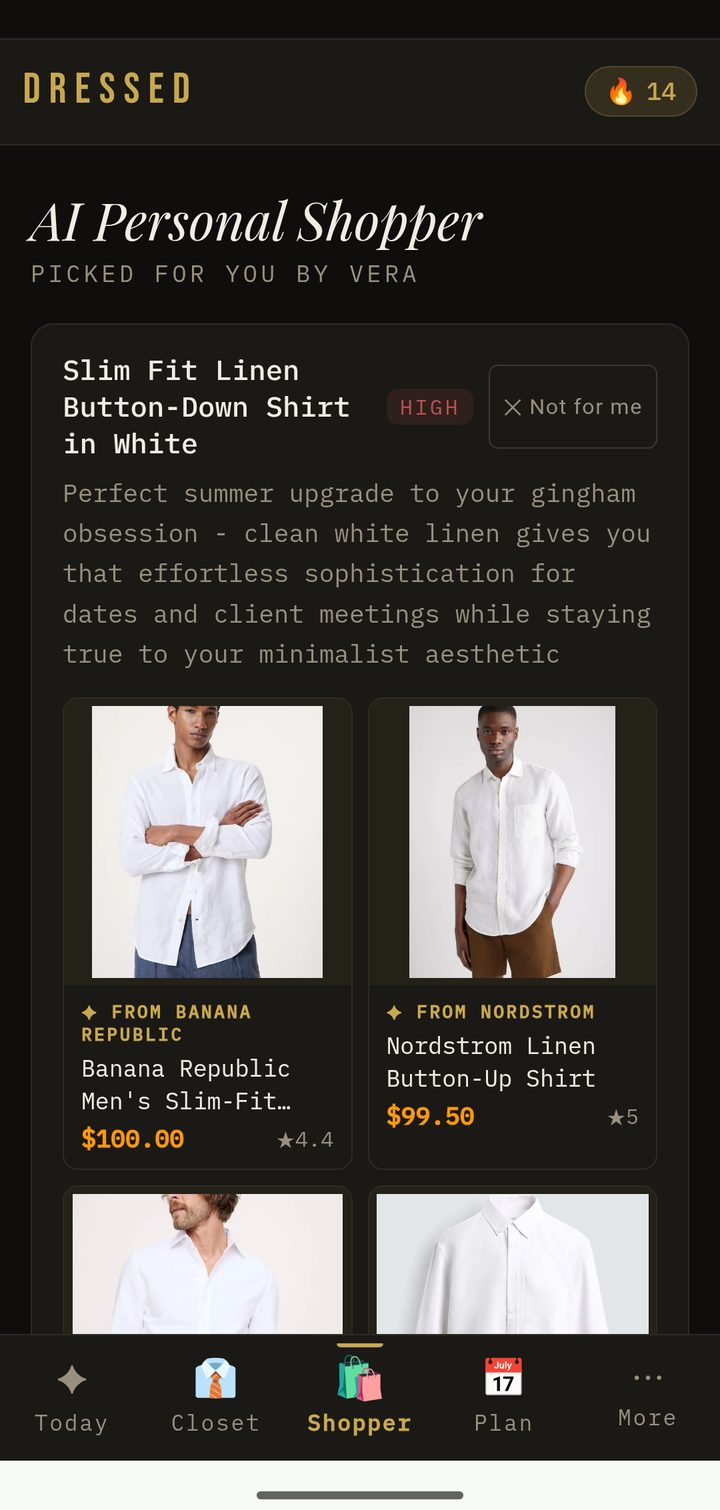
The AI Shopper runs a three-stage analysis on your wardrobe before making any recommendation.
What makes AI wardrobe shopping different from regular shopping
The difference is direction. Regular online shopping is undirected — you browse until something appeals to you, with no systematic connection to what you already own. AI wardrobe shopping starts from your actual wardrobe and works outward, filling specific gaps rather than accumulating random purchases.
The practical difference: a $120 mid-layer identified as a high-priority gap will get worn constantly — especially if you have a weekly outfit planner putting it to use — because you already own everything that pairs with it. A $120 shirt purchased on impulse might never find its outfit. The gap analysis changes the economics of getting dressed — and makes answering what to wear today meaningfully easier when your wardrobe is working as a complete system.
Matched to your style, not a generic trend
DRESSED's recommendations are drawn from your Style Profile — the AI's understanding of your aesthetic, color preferences, brand tier, and personal rules. If you consistently avoid loud patterns, the shopper won't recommend them. If your feedback shows you prefer understated basics over statement pieces, the gap recommendations skew toward versatile neutrals over bold additions.
Dismissible by category
Not every gap is one you want to fill. If you have no interest in adding a blazer, you can dismiss that category permanently and it won't appear in future recommendations. DRESSED respects the constraints and preferences that are specific to you — the gaps it surfaces are filtered by what's actually relevant to how you dress, not what a generic algorithm thinks you need.
How does DRESSED know what my wardrobe is missing?
DRESSED knows what's in your wardrobe because you've catalogued it — either through photo scanning (the AI identifies each item automatically) or manual entry. From that catalogue, Vera analyzes the distribution of categories, formality levels, colors, and layering roles to identify where your wardrobe has gaps. It also uses your outfit history: if Vera regularly has to reach for the same item because there's no alternative, that signals a gap worth filling.
Are the product recommendations actually matched to my style?
Yes. The recommendations are generated using your Style Profile — the AI's understanding of your aesthetic preferences, brand tier, color palette, and personal style rules. The search queries sent to find products on Amazon include specific style attributes (slim fit, merino wool, charcoal, etc.) that reflect what would actually work with what you own. They're not generic "you might like" recommendations — they're specifically targeted at filling identified gaps in a style-consistent way.
What if I don't want recommendations in certain categories?
You can dismiss any recommendation category permanently. Tap "Not for me" on any gap card and that category won't appear in future analyses. Your dismissed categories are visible and reversible in Style Rules settings. This means over time the AI Shopper gets increasingly accurate to your actual shopping preferences, not just what your wardrobe theoretically needs.
Does DRESSED shop for men's and women's clothing?
Yes. DRESSED has separate gender-aware analysis for men's and women's wardrobes. The gap identification, style rules, and product searches are all gender-appropriate — women's outfits are analyzed differently from men's outfits (dress + bottoms is never recommended for women, for example), and product searches are filtered to the correct gender category. This is set during onboarding and adjustable in Style Rules settings at any time.
Find out what your wardrobe is missing.
DRESSED analyses your wardrobe, identifies the specific gaps limiting your outfits, and finds those items on Amazon — matched to your style. Free to try.
Analyse My Wardrobe →